
Good morning dear Ones,
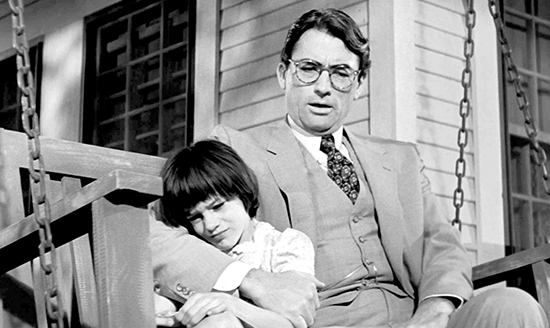
For about a week now, I have been immersed in reading To Kill a Mockingbird. The book features a lawyer, Atticus Finch, and his two children, Jem and Scout, in the Deep South (Alabama) in 1932.
Guided by what their neighbor Miss Maudie calls his “civilized heart,” Atticus agrees to take on the case of Tom Robinson, a Black man falsely accused of rape.
“This case, Tom Robinson’s case, is something that goes to the essence of a man’s conscience—Scout, I couldn’t go to church and worship God if I didn’t try to help that man.”
The night before the trial, Tom Robinson is transferred to the tiny jail in downtown Maycomb. Atticus takes along an extension cord and a lightbulb, deciding to spend the night on the jail’s porch. Intrigued by this unusual gear in the middle of the night, the three children—Jem, Scout, and their friend Dill—decide to follow Atticus into town. They spot him sitting on the steps of the jail, bathed in light, and are about to head home when a convoy of cars comes speeding into town. Several angry men scramble out, armed with rifles and pistols. Their intentions are unmistakable; they set out to “negotiate” their way past Atticus, who remains unperturbed.
As tension mounts, the three children appear out of nowhere and fearlessly position themselves in front of Atticus, without fully grasping the situation. Although repeatedly ordered to leave, Jem—the eldest of the group—refuses to listen to his father and go home.
It is then that eight-year-old Scout addresses the crowd—and specifically one man, Mr. Cunningham, whose son, Walter, she knows well, having thrashed him at school (before he was invited to the Finch home for dinner!). When her appeal to Mr. Cunningham’s paternal instincts fails to move him, she brings up his “entailments”—the system of settling debts with goods upon which the destitute Cunningham family relies.
“Entailments are bad!”—these innocent words finally break through Mr. Cunningham’s emotional defenses and cause the crowd to eventually disperse.
If you would like to know the details of this heroic feat, feel free to read the two excerpts below in reverse order: first the family debriefing from Chapter 16, then the confrontation with the crowd in Chapter 15. That is how this story truly came together for me.
Who would have thought that an innocent young girl could disperse an angry crowd through the “freshness” and “candor” of her spirit—in 1932 Alabama!
Topic: The devastating freshness of an 8-year old
Time: Sep 24 @ 2:30 PM Eastern Time
Meeting ID: 811 3934 8047
“Atticus placed his fork beside his knife and pushed his plate aside. “Mr. Cunningham’s basically a good man,” he said, “he just has his blind spots along with the rest of us.”
Jem spoke. “Don’t call that a blind spot. He’d a killed you last night when he first went there.”
“He might have hurt me a little,” Atticus conceded, “but son, you’ll understand folks a little better when you’re older. A mob’s always made up of people, no matter what. Mr. Cunningham was part of a mob last night, but he was still a man. Every mob in every little Southern town is always made up of people you know—doesn’t say much for them, does it?”
“I’ll say not,” said Jem.
“So it took an eight-year-old child to bring ’em to their senses, didn’t it?” said Atticus.
“That proves something—that a gang of wild animals can be stopped, simply because they’re still human. Hmp, maybe we need a police force of children . . . you children last night made Walter Cunningham stand in my shoes for a minute. That was enough.””
Chapter 16 page 179
“Mr. Cunningham wore no hat, and the top half of his forehead was white in contrast to his sun scorched face, which led me to believe that he wore one most days. He shifted his feet, clad in heavy work shoes.
“Don’t you remember me, Mr. Cunningham? I’m Jean Louise Finch. You brought us some hickory nuts one time, remember?” I began to sense the futility one feels when unacknowledged by a chance acquaintance.
“I go to school with Walter,” I began again. “He’s your boy, ain’t he? Ain’t he, sir?”
Mr. Cunningham was moved to a faint nod. He did know me, after all.
“He’s in my grade,” I said, “and he does right well. He’s a good boy,” I added, “a real nice boy. We brought him home for dinner one time. Maybe he told you about me, I beat him up one time but he was real nice about it. Tell him hey for me, won’t you?”
Atticus had said it was the polite thing to talk to people about what they were interested in, not about what you were interested in. Mr. Cunningham displayed no interest in his son, so I tackled his entailment once more in a last-ditch effort to make him feel at home.
“Entailments are bad,” I was advising him, when I slowly awoke to the fact that I was addressing the entire aggregation. The men were all looking at me, some had their mouths half-open. Atticus had stopped poking at Jem: they were standing together beside Dill. Their attention amounted to fascination. Atticus’s mouth, even, was half-open, an attitude he had once described as uncouth. Our eyes met and he shut it.
“Well, Atticus, I was just sayin’ to Mr. Cunningham that entailments are bad an’ all that, but you said not to worry, it takes a long time sometimes . . . that you all’d ride it out together . . .” I was slowly drying up, wondering what idiocy I had committed. Entailments seemed all right enough for living room talk.
I began to feel sweat gathering at the edges of my hair; I could stand anything but a bunch of people looking at me. They were quite still.
“What’s the matter?” I asked.
Atticus said nothing. I looked around and up at Mr. Cunningham, whose face was equally impassive. Then he did a peculiar thing. He squatted down and took me by both shoulders.
“I’ll tell him you said hey, little lady,” he said.
Then he straightened up and waved a big paw. “Let’s clear out,” he called. “Let’s get going, boys.”
As they had come, in ones and twos the men shuffled back to their ramshackle cars. Doors slammed, engines coughed, and they were gone.
I turned to Atticus, but Atticus had gone to the jail and was leaning against it with his face to the wall. I went to him and pulled his sleeve. “Can we go home now?” He nodded, produced his handkerchief, gave his face a going over and blew his nose violently.
Chapter 15 pages 174-75


